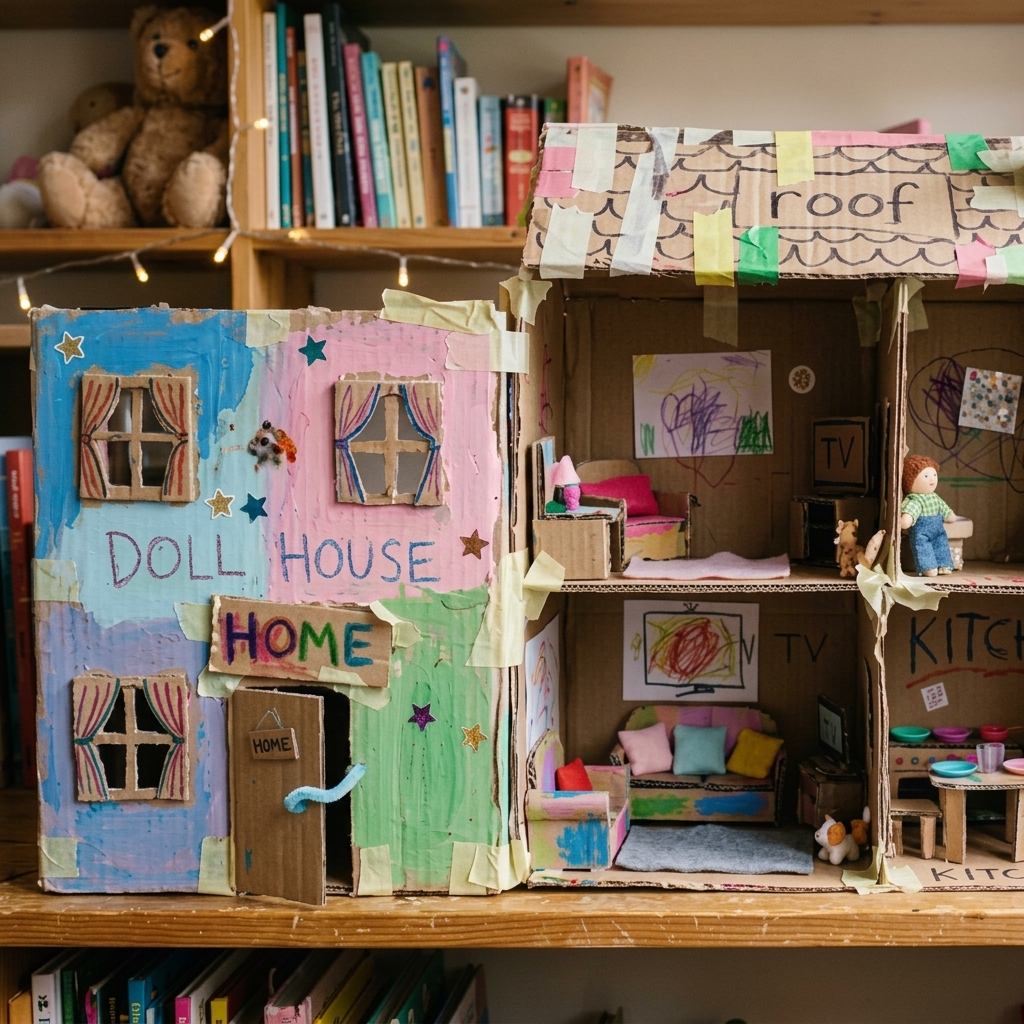
Creative projects allow children to transform simple ideas into wonderful creations while developing valuable academic, artistic, and practical skills. Among the many hands-on activities enjoyed in classrooms, homes, libraries, and community workshops, one project consistently captures children’s imagination: building a creative miniature cardboard dollhouse. Using recycled cardboard, paper, craft supplies, and plenty of imagination, children design and build their own tiny dream home complete with rooms, furniture, decorations, and miniature accessories.
A miniature dollhouse is much more than a craft project. It becomes a place where stories begin, friendships grow, and imagination flourishes. Children can decorate every room according to their own ideas, create miniature families, invent adventures, and enjoy endless hours of imaginative play after construction is complete.
Teachers and parents appreciate this project because it combines art, engineering, mathematics, environmental education, language development, and creative thinking into one enjoyable learning experience. Since most materials are recycled or inexpensive, the project is affordable while also encouraging children to value sustainability and creative reuse.
Best of all, every dollhouse is unique. Some become colorful family homes, while others transform into fairy cottages, castles, beach houses, mountain cabins, or magical fantasy worlds. Every design reflects the creativity of its young architect.
Why Children Love Building a Miniature Dollhouse
Children naturally enjoy creating miniature worlds. Designing tiny rooms, arranging furniture, decorating walls, and inventing characters gives them complete creative freedom.
Building a dollhouse is exciting because children are involved in every step of the process. They choose the layout, decorate each room, make miniature furniture, and decide how every space should look.
After construction, the dollhouse becomes an interactive toy instead of simply a finished craft. Children continue playing with it for weeks or even months, creating stories and role-playing different situations.
Because no two dollhouses are exactly alike, every child feels proud of building something original.
Educational Objectives
Although the project feels like creative play, it supports learning across many academic subjects.
Students develop:
- Creativity
- Fine motor skills
- Spatial awareness
- Problem-solving
- Planning skills
- Artistic expression
- Mathematical thinking
- Communication
- Storytelling
- Collaboration
- Patience
- Environmental awareness
Project-based learning encourages children to connect ideas from different disciplines while having fun.
Materials Needed
Most supplies are inexpensive and easy to collect.
Essential materials include:
- Thick cardboard
- Empty cereal boxes
- Shipping boxes
- Colored paper
- Construction paper
- Glue
- Masking tape
- Child-safe scissors
- Craft knife (adult use only)
- Paint
- Paintbrushes
- Markers
- Pencil
- Ruler
- Popsicle sticks
- Toothpicks
Optional decorative materials include:
- Fabric scraps
- Felt
- Buttons
- Beads
- Yarn
- Foam sheets
- Washi tape
- Stickers
- Cotton balls
- Artificial flowers
- Colored gems
- Decorative paper
Many miniature accessories can also be made from recycled household items.
Planning the Dollhouse
Every successful project begins with careful planning.
Children first decide what type of dollhouse they want to build.
Ideas include:
- Family home
- Fairy cottage
- Modern apartment
- Beach house
- Mountain cabin
- Castle
- Princess palace
- Treehouse
- Farmhouse
- Magical wizard home
Students sketch simple floor plans showing where each room will be located.
Planning encourages organization and logical thinking.
Building the Structure
The cardboard pieces form the walls, floors, and roof.
Teachers assist with measuring and cutting while children assemble the structure using glue and tape.
Students quickly discover the importance of:
Strong corners
Balanced walls
Stable floors
Careful measurements
This introduces basic engineering concepts in a simple and enjoyable way.
Designing the Rooms
One of the most exciting parts of the project is planning the interior.
Children may include:
- Living room
- Kitchen
- Bedroom
- Bathroom
- Dining room
- Balcony
- Garden
- Library
- Playroom
- Art studio
Every room reflects the child’s imagination.
Some homes even include secret rooms or rooftop gardens.
Creating Miniature Furniture
Children love making tiny furniture from cardboard and recycled materials.
Ideas include:
Beds
Tables
Chairs
Sofas
Bookshelves
Cabinets
Desks
Lamps
Fireplaces
Kitchen counters
Small boxes, popsicle sticks, cardboard strips, bottle caps, and paper tubes become beautiful miniature furniture with a little creativity.
Decorating the Interior
Decoration transforms the dollhouse into a welcoming home.
Children create:
Wallpaper
Curtains
Carpets
Pictures
Mirrors
Plants
Windows
Shelves
Clocks
Wall decorations
Each room develops its own personality.
Designing the Exterior
The outside of the house is just as important as the inside.
Students paint:
Brick walls
Wooden cabins
Stone cottages
Colorful modern homes
Fairy castles
They may also add:
Flowers
Trees
Mailboxes
Fences
Pathways
Garden furniture
These details make every dollhouse unique.
Learning Through Mathematics
The project naturally supports mathematics.
Students measure:
Lengths
Widths
Heights
Room sizes
Furniture dimensions
They compare shapes and practice symmetry while creating balanced designs.
Mathematics becomes meaningful through real construction tasks.
Engineering and Problem-Solving
Building a miniature house introduces simple engineering concepts.
Children discover how to:
Strengthen walls
Support roofs
Balance furniture
Improve stability
Solve construction problems
When pieces do not fit perfectly, students experiment until they find successful solutions.
Mistakes become valuable learning opportunities.
Developing Fine Motor Skills
Many construction tasks strengthen hand coordination.
Children practice:
Cutting
Drawing
Painting
Folding paper
Applying glue
Placing tiny decorations
Building miniature furniture
These activities improve precision and dexterity.
Encouraging Creativity
Every child imagines a different dream house.
One student creates a colorful beach cottage.
Another builds a medieval castle.
Someone designs a futuristic smart home.
Others invent magical fairy villages.
Unlimited creative freedom encourages originality and confidence.
Storytelling Opportunities
Once the dollhouses are complete, children begin inventing stories.
Examples include:
The Magical Cottage
Grandma’s Tiny House
The Secret Castle
The Forest Family
The Little Explorer
The Fairy Garden
The Mountain Adventure
Storytelling strengthens literacy while encouraging imagination.
Environmental Education
The project teaches children the importance of recycling.
Instead of throwing cardboard away, they transform it into something valuable.
Teachers explain:
Reducing waste
Reusing materials
Protecting forests
Saving natural resources
Creative recycling
Children begin seeing recyclable materials as opportunities rather than garbage.
Teamwork Activities
Children may also work together in small groups.
Tasks are divided among team members.
One student measures.
Another cuts cardboard.
Someone paints.
Others build furniture.
Working together strengthens communication, cooperation, and leadership skills.
Classroom Role-Playing
Finished dollhouses become excellent educational tools.
Children use them for:
Pretend family life
Community helper stories
Neighborhood adventures
Historical settings
Animal homes
Fantasy stories
Role-playing improves communication and social development.
Seasonal Decorations
The dollhouse can change throughout the year.
Spring:
Flowers
Butterflies
Green gardens
Summer:
Beach decorations
Outdoor furniture
Sun umbrellas
Autumn:
Pumpkins
Leaves
Harvest decorations
Winter:
Snow
Holiday lights
Miniature fireplaces
Seasonal decorating keeps the project exciting all year.
Home Extension Activities
Parents can continue expanding the dollhouse.
Ideas include:
Adding new rooms.
Building garages.
Creating gardens.
Making tiny pets.
Building playgrounds.
Designing furniture collections.
Writing family stories.
These activities strengthen family relationships while encouraging creativity.
Safety Guidelines
Teachers establish simple safety rules.
Children should:
Use scissors carefully.
Allow adults to use craft knives.
Keep workspaces organized.
Use glue responsibly.
Wash hands after painting.
Adult supervision ensures a safe learning environment.
Common Challenges
Every construction project includes small difficulties.
Sometimes:
Walls lean.
Furniture becomes too large.
Glue dries slowly.
Roofs collapse.
Decorations fall off.
These challenges encourage persistence and creative problem-solving.
Children learn that improvement comes through practice.
Assessing Student Learning
Teachers evaluate both the construction process and the finished dollhouse.
Assessment may include:
Creativity
Planning
Participation
Problem-solving
Communication
Teamwork
Presentation
Reflection
Every child has opportunities to demonstrate success.
Presenting the Finished Dollhouses
Each student presents the completed project.
Children explain:
The house design.
Favorite room.
Furniture ideas.
Construction challenges.
Creative decorations.
Lessons learned.
Presentation activities strengthen confidence and public speaking.
Skills Developed
By the end of the project, children have strengthened many important abilities.
These include:
Creative thinking
Engineering awareness
Artistic design
Communication
Organization
Planning
Mathematics
Environmental responsibility
Patience
Fine motor coordination
Collaboration
Self-confidence
These lifelong skills support future learning across many subjects.
Long-Term Benefits
Unlike many classroom crafts that are quickly forgotten, the miniature dollhouse continues inspiring imaginative play.
Children use it for:
Storytelling
Role-playing
Reading activities
Drama lessons
Creative writing
Family play
Art displays
The project remains meaningful long after construction is complete.
Tips for Teachers
Successful dollhouse projects often include:
Preparing materials beforehand.
Demonstrating each construction step clearly.
Allowing creative freedom.
Encouraging teamwork.
Celebrating effort rather than perfection.
Providing enough time for decoration.
Displaying finished houses proudly.
Positive encouragement helps every child enjoy success.
Conclusion
Building a creative miniature cardboard dollhouse is one of the most enjoyable and educational projects children can experience. It combines art, engineering, mathematics, storytelling, environmental awareness, and imaginative play into a rich hands-on activity that inspires curiosity and creativity. By transforming simple recycled cardboard into beautiful miniature homes, children learn that extraordinary creations can come from ordinary materials.
Throughout the project, students strengthen fine motor skills, improve problem-solving abilities, practice measurement and planning, and develop confidence by expressing their own unique ideas. At the same time, they gain a deeper appreciation for recycling and discover how imagination can give new life to everyday objects.
Most importantly, the completed dollhouse becomes much more than a craft. It becomes a tiny world filled with stories, adventures, friendships, and dreams. Whether used in classrooms, homes, libraries, or community workshops, this beloved project encourages children to think like designers, builders, artists, and storytellers. With a few recycled cardboard boxes, simple craft supplies, and a creative imagination, young learners can build a magical miniature home that provides lasting memories, endless opportunities for play, and valuable lessons that extend far beyond the classroom.