Hands-on learning is one of the most effective ways to inspire curiosity, creativity, and confidence in children. When students build something with their own hands, they gain a deeper understanding of how everyday objects work while developing important artistic and practical skills. One school project that has become especially popular among children is making a DIY guitar from a recycled cereal box. This fun activity combines music, art, engineering, recycling, and imaginative play into one memorable learning experience.
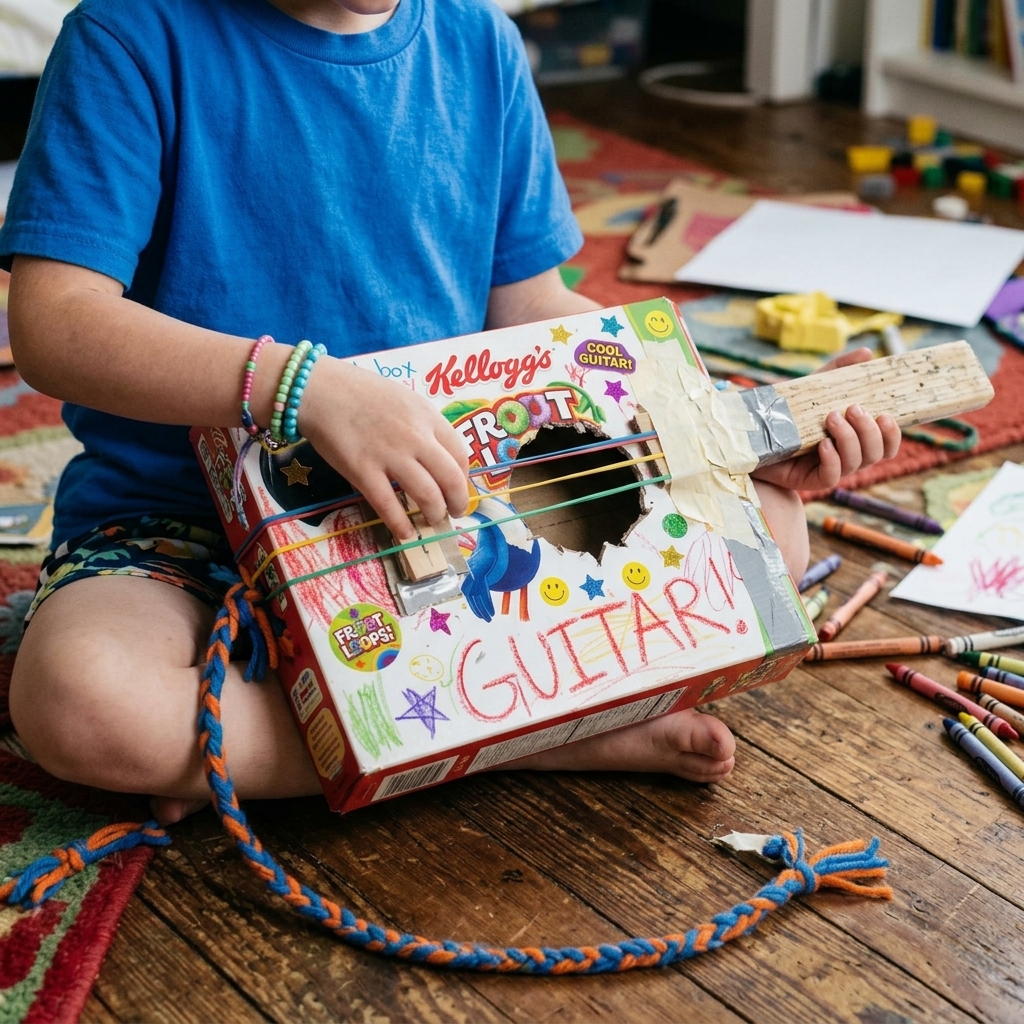
A cereal box guitar is a simple musical craft made from common household materials such as an empty cereal box, cardboard tubes, rubber bands, glue, paper, paint, and decorative supplies. Although it is not intended to replace a real guitar, it introduces children to the basic principles of stringed instruments while encouraging creativity and environmental responsibility.
Children enjoy decorating their guitars with colorful designs, experimenting with different sounds, and pretending to perform concerts for classmates, teachers, and family members. Every guitar becomes a unique creation that reflects its builder’s personality and imagination.
Teachers appreciate this project because it supports learning across multiple subjects, including music, science, mathematics, visual arts, language development, and environmental education. Best of all, the materials are inexpensive, widely available, and easy to recycle.
Why Children Love This Project
Children naturally enjoy music and making things with their own hands. Combining both activities into one exciting project makes the cereal box guitar a favorite classroom experience.
Young learners love transforming an ordinary cereal box into something that resembles a real musical instrument. Decorating the guitar with bright colors, patterns, stickers, and drawings allows every child to express individual creativity.
After construction is complete, children enjoy pretending to be musicians, singers, or members of a band. They invent songs, perform for classmates, and create imaginative concerts that build confidence and communication skills.
Because every guitar looks different, students feel proud of creating an instrument that is completely their own.
Educational Goals
Although this project feels like play, it supports many valuable educational objectives.
Students develop:
- Creativity
- Fine motor skills
- Hand-eye coordination
- Problem-solving
- Scientific observation
- Musical awareness
- Artistic expression
- Teamwork
- Communication
- Environmental responsibility
- Patience
- Self-confidence
Project-based learning helps children connect ideas from different subjects while enjoying the creative process.
Materials Needed
Most supplies are inexpensive and can be found at home or in school.
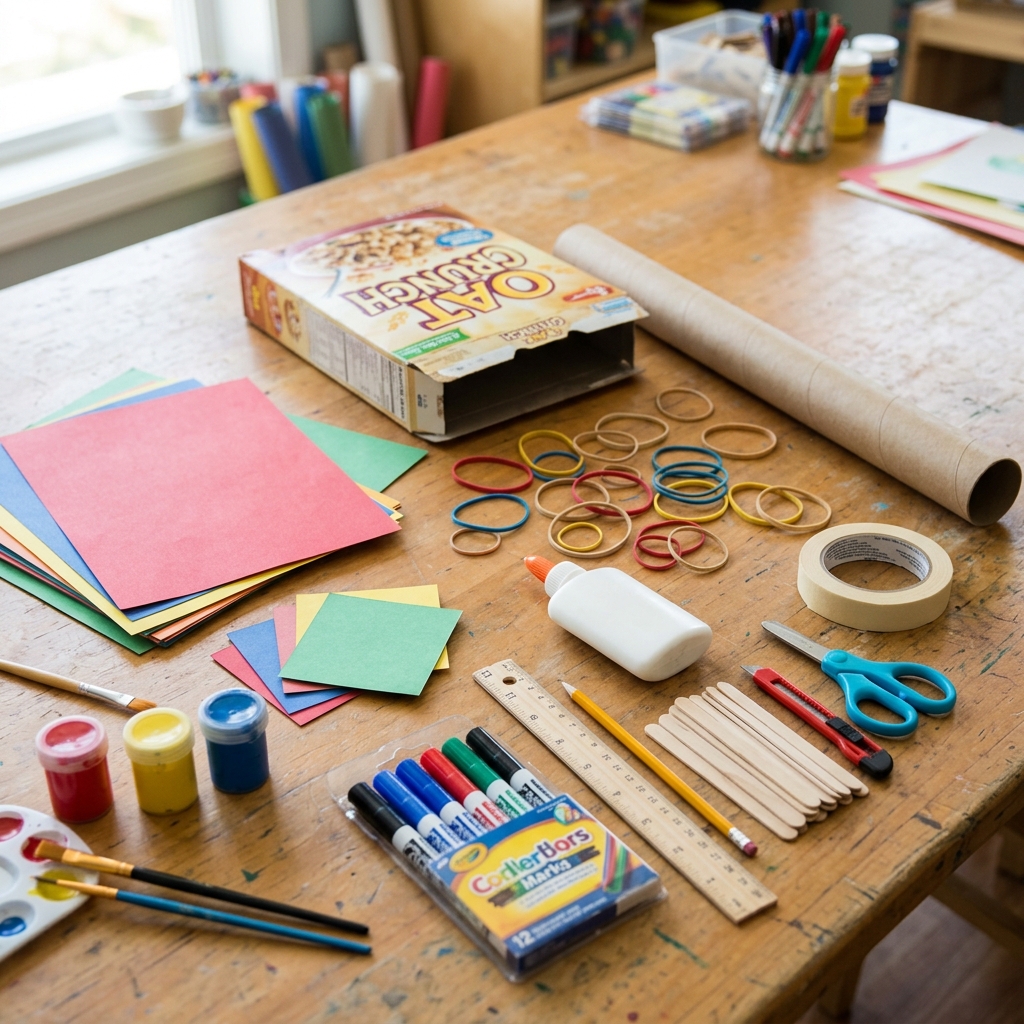
Essential materials include:
- Empty cereal box
- Cardboard tube
- Rubber bands of different sizes
- Glue
- Masking tape
- Child-safe scissors
- Craft knife (adult use only)
- Colored paper
- Paint
- Paintbrushes
- Markers
- Ruler
- Pencil
- Popsicle sticks
- Construction paper
Optional decorations include:
- Stickers
- Glitter
- Foam shapes
- Washi tape
- Buttons
- Yarn
- Sequins
- Fabric scraps
- Colorful gems
- Alphabet letters
Learning About String Instruments
Before beginning construction, teachers introduce children to the basic parts of a guitar.
Students learn about:
- The body
- The neck
- The strings
- The sound hole
- The headstock
Children discover that when strings vibrate, they create sound. Although a cereal box guitar is much simpler than a real instrument, it demonstrates the same basic scientific principle.
Preparing the Cereal Box
The cereal box forms the body of the guitar.
Teachers help children:
Empty the box.
Close the top securely.
Tape the edges.
Strengthen weak corners.
A circular opening is carefully cut into the center of one side to create the sound hole.
Adults should perform this step when sharp tools are required.
Building the Guitar Neck
A cardboard tube or folded cardboard strip becomes the guitar neck.
It is attached securely to one end of the cereal box using strong tape and glue.
Students learn that stability is important because the neck supports the rubber band strings.
Testing different attachment methods encourages engineering thinking.
Adding the Strings
One of the most exciting stages is attaching the rubber band strings.
Children stretch rubber bands across the sound hole.
Different rubber band sizes produce different sounds.
Students quickly notice that:
Thicker bands make deeper sounds.
Thinner bands produce higher sounds.
Tighter strings vibrate differently than loose ones.
These discoveries introduce children to the science of sound through direct experimentation.
Decorating the Guitar
Once construction is complete, creativity takes over.
Children paint their guitars in bright colors or decorate them with imaginative themes.
Popular ideas include:
- Rainbow Guitar
- Jungle Guitar
- Space Guitar
- Ocean Guitar
- Dinosaur Guitar
- Superhero Guitar
- Princess Guitar
- Rock Star Guitar
- Animal Guitar
- Pirate Guitar
Some children add musical notes, stars, hearts, flowers, or geometric patterns.
Others invent their own logos just like famous musicians.
Exploring the Science of Sound
The cereal box guitar provides an excellent introduction to basic physics.
Children observe how sound changes when:
Strings are tighter.
Strings are looser.
Rubber bands have different thicknesses.
The sound hole is covered.
The box is held differently.
Instead of memorizing scientific facts, students experience them through hands-on investigation.
Connecting the Project to Music Lessons
Teachers can integrate the guitar into music education.
Students explore:
Rhythm
Tempo
Beat
Pitch
Volume
Simple melodies
Group performances
Although the homemade instrument produces simple sounds, it helps children understand the role of string instruments in music.
Mathematics in the Project
The activity also reinforces mathematics.
Students practice:
Measuring
Comparing lengths
Estimating distances
Counting strings
Recognizing patterns
Creating symmetrical designs
Teachers may ask children to measure the neck, compare rubber band sizes, or count decorative shapes.
Developing Fine Motor Skills
Many construction tasks strengthen hand muscles and coordination.
Children practice:
Drawing
Cutting
Painting
Stretching rubber bands
Applying glue
Decorating carefully
Holding small objects
These activities support handwriting and everyday motor development.
Encouraging Creative Thinking
No two guitars are exactly alike.
One student may create a glitter-covered rock guitar.
Another designs a jungle-themed instrument filled with animal drawings.
Someone else paints colorful abstract patterns.
Creative freedom encourages originality and self-expression.
Teamwork and Cooperation
Children may also work together in small groups.
Tasks can be divided among classmates.
One child prepares the box.
Another paints.
Someone else attaches the neck.
Others decorate.
Working together teaches communication, cooperation, and respect for different ideas.
Classroom Music Festival
After all guitars are complete, teachers can organize a classroom concert.
Children may:
Pretend to perform songs.
Create a school band.
Invent dance routines.
Sing together.
Take turns as solo performers.
This fun event builds confidence and celebrates every student’s effort.
Storytelling Through Music
The guitar can also inspire creative writing.
Students invent stories such as:
The Magical Guitar
The Singing Forest
The Rock Star Dinosaur
The Pirate Music Festival
The Rainbow Concert
The Friendly Music Band
Combining music and storytelling strengthens imagination and literacy.
Environmental Education
One of the most valuable lessons involves recycling.
Children realize that empty cereal boxes do not have to become waste.
Teachers explain:
Reducing trash
Reusing materials
Protecting forests
Saving resources
Creative recycling
Students begin looking at recyclable materials with fresh eyes.
Home Extension Activities
Families can continue exploring music together.
Ideas include:
Decorating additional guitars.
Holding family concerts.
Writing original songs.
Creating homemade drums.
Making cardboard microphones.
Building a full pretend band.
These activities encourage family participation and creative play.
Common Challenges
Children sometimes face small construction problems.
Rubber bands may slip.
The neck may become loose.
Paint may require extra drying time.
Decorations may fall off.
Instead of becoming discouraged, students learn to test solutions and improve their work.
This engineering mindset is one of the greatest educational benefits of the project.
Safety Guidelines
Teachers should establish clear safety rules.
Children should:
Use scissors carefully.
Allow adults to use craft knives.
Stretch rubber bands safely.
Keep workspaces organized.
Wash hands after painting.
Handle glue responsibly.
A safe classroom helps everyone enjoy the activity.
Assessing Student Learning
Teachers observe the entire learning process rather than only the finished guitar.
Assessment may include:
Creativity
Participation
Following directions
Problem-solving
Communication
Teamwork
Scientific observations
Presentation skills
Reflection
Every child can demonstrate success in different ways.
Presenting the Finished Instruments
Each student introduces his or her guitar to the class.
Children explain:
The design theme.
The decorations.
How the strings work.
What materials were used.
What they learned.
What they enjoyed most.
Public presentations strengthen speaking confidence and communication skills.
Skills Developed
By the end of the project, children have strengthened many lifelong abilities.
These include:
Creative thinking
Scientific curiosity
Artistic design
Musical awareness
Engineering understanding
Environmental responsibility
Communication
Collaboration
Fine motor coordination
Patience
Confidence
Innovation
These skills continue supporting learning in many future activities.
Long-Term Benefits
Unlike many classroom crafts that are quickly forgotten, the cereal box guitar continues providing opportunities for learning and imaginative play.
Children use it for:
Pretend concerts
Music lessons
Storytelling
Role-playing
School performances
Art displays
Home entertainment
The project remains meaningful long after construction is complete.
Tips for Teachers
Successful projects often include:
Preparing materials in advance.
Demonstrating each construction step clearly.
Encouraging creative freedom.
Allowing experimentation with sounds.
Celebrating effort instead of perfection.
Providing enough decoration time.
Organizing a classroom concert after completion.
Positive encouragement helps every child feel successful.
Conclusion
Building a DIY guitar from a recycled cereal box is one of the most enjoyable and educational projects children can experience. It combines music, art, science, engineering, mathematics, recycling, and imaginative play into a single hands-on activity that captures children’s attention from beginning to end. As students transform simple household materials into colorful musical instruments, they discover that creativity and curiosity are powerful tools for learning.
Throughout the project, children strengthen fine motor skills, explore the science of sound, practice artistic design, and gain confidence by expressing themselves through music and imaginative performance. They also learn valuable lessons about sustainability by giving new life to recyclable materials that might otherwise become waste.
Most importantly, the cereal box guitar reminds children that wonderful creations do not require expensive supplies or advanced equipment. With an empty cereal box, a few rubber bands, colorful decorations, and a big imagination, they can build an instrument that brings joy, encourages exploration, and inspires countless hours of creative play. Whether used in schools, homes, libraries, or community workshops, this beloved project creates lasting memories while helping young learners discover the exciting connections between art, music, science, and environmental responsibility.