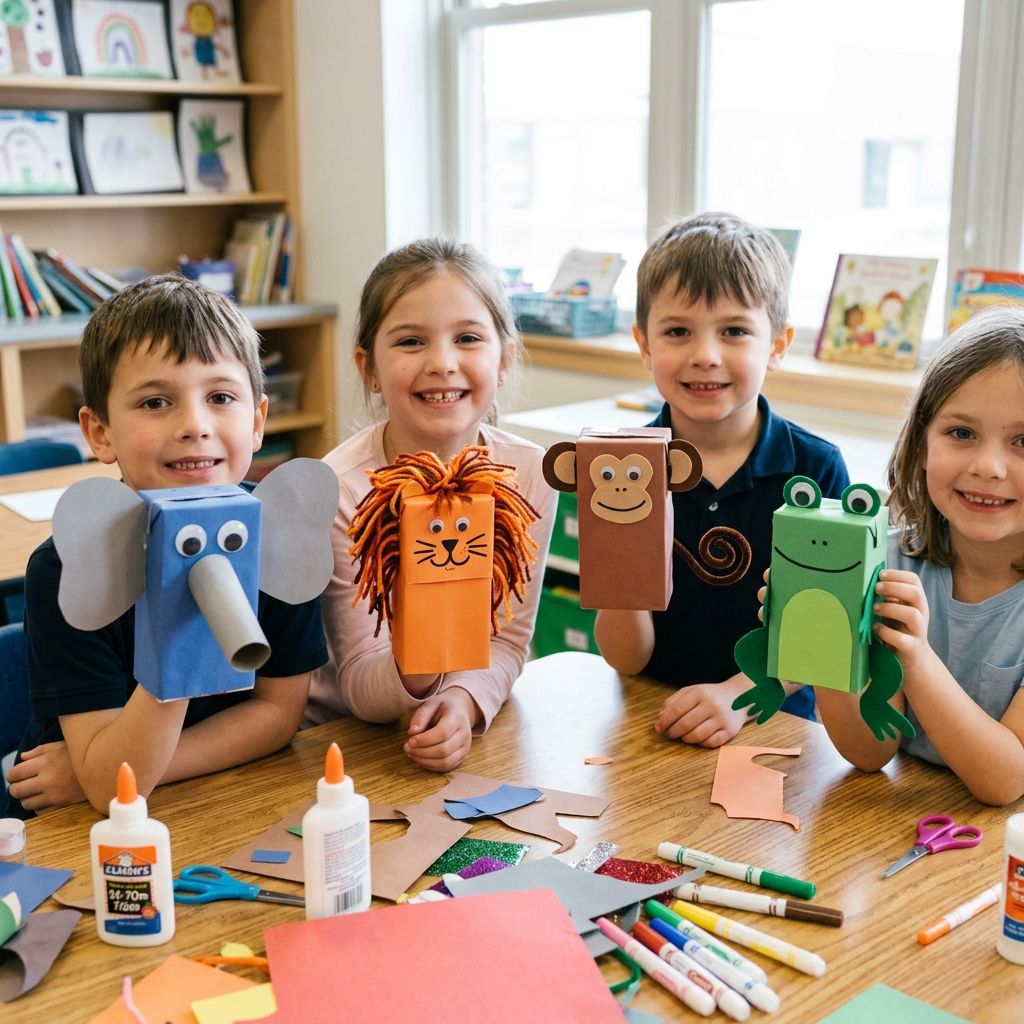
Children learn best when they can explore, imagine, build, and play at the same time. One of the most enjoyable classroom activities combines all of these elements into a single hands-on experience: making animal puppets from recycled juice boxes. This creative school project teaches children that everyday objects can become something exciting with a little imagination and effort. Instead of throwing empty juice cartons into the recycling bin, students transform them into colorful animal characters that can be used for storytelling, classroom performances, language activities, and imaginative play.
The project is suitable for preschoolers, elementary school students, homeschool learners, scout groups, after-school clubs, and family craft sessions. It encourages creativity while introducing important lessons about recycling, environmental responsibility, artistic expression, teamwork, and problem-solving.
Unlike many craft activities that require expensive materials, this project uses supplies that are inexpensive and easy to find. Empty juice boxes, colored paper, paint, markers, glue, scissors, and a few decorative items are enough to create adorable lions, elephants, foxes, rabbits, pandas, frogs, owls, dinosaurs, and many other animals.
Because every puppet is unique, children feel proud of their work and excited to share their creations with friends and family. After the puppets are finished, they can be used in puppet theaters, storytelling lessons, educational games, and classroom presentations, making this project valuable long after the crafting session has ended.
Why Children Love This Project
There are many reasons why children enjoy making animal puppets from juice boxes.
First, they love turning something ordinary into something magical. Watching an empty juice carton become a smiling lion or a funny monkey feels almost like magic.
Second, children enjoy choosing their favorite animals. Some prefer farm animals, while others choose jungle creatures, sea animals, forest wildlife, or even fantasy animals.
Third, decorating the puppets allows every child to express their own personality. No two puppets ever look exactly alike.
Finally, children especially enjoy using their puppets after they finish making them. They invent voices, create adventures, perform mini plays, and interact with classmates in imaginative ways.
The combination of crafting and dramatic play keeps children engaged from beginning to end.
Learning Objectives
Although this project feels like play, it supports many educational goals.
Students learn about:
- Recycling and sustainability
- Creative thinking
- Fine motor development
- Cutting and gluing skills
- Color recognition
- Animal characteristics
- Storytelling
- Speaking confidence
- Listening skills
- Cooperation
- Following instructions
- Artistic design
- Imaginative play
Teachers appreciate projects that combine multiple learning areas into one enjoyable activity.
Materials Needed
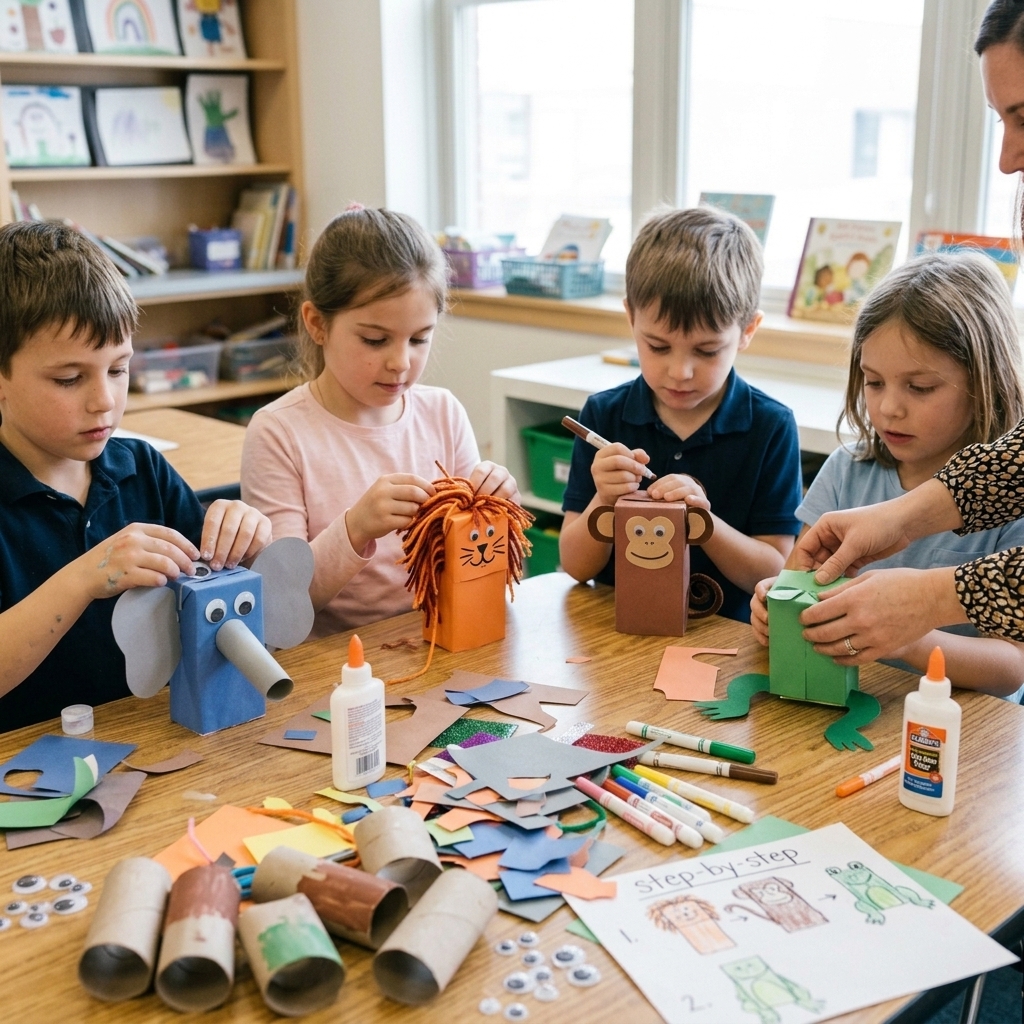
Most supplies are already available at home or in school.
Basic materials include:
- Empty juice boxes
- Colored construction paper
- Acrylic or poster paint
- Paintbrushes
- Markers
- Googly eyes
- Glue sticks
- White craft glue
- Child-safe scissors
- Black marker
- Colored foam sheets
- Pipe cleaners
- Yarn
- Cotton balls
- Felt fabric
- Popsicle sticks
- Tape
- Hole punch
- String
- Recycled cardboard
Optional decorative materials include:
- Glitter
- Stickers
- Sequins
- Buttons
- Fabric scraps
- Pom-poms
- Feathers
- Washi tape
Preparing the Juice Boxes
Before the crafting session begins, the juice boxes should be cleaned carefully.
Children can help rinse the cartons with warm water. The boxes should then be left open overnight to dry completely.
Teachers may cover the printed labels with white paper or paint so children have a blank surface to decorate.
This preparation ensures a cleaner and more professional-looking puppet.
Step 1: Planning the Animal
Before decorating, children decide which animal they want to create.
Teachers can show pictures of different animals to inspire ideas.
Popular choices include:
- Lion
- Tiger
- Zebra
- Elephant
- Giraffe
- Monkey
- Panda
- Rabbit
- Dog
- Cat
- Bear
- Fox
- Owl
- Penguin
- Frog
- Crocodile
- Dinosaur
- Turtle
Students may sketch simple designs before beginning.
Planning encourages creative thinking and organization.
Step 2: Painting the Puppet
Painting transforms the juice box into the animal’s body.
Examples include:
A lion may be painted golden yellow.
A zebra uses white paint with black stripes.
A panda combines white and black sections.
A frog becomes bright green.
An owl features brown feathers.
Painting helps children practice brush control and color mixing.
Once painted, the puppets should dry completely.
Step 3: Adding Animal Features
Next comes the exciting decoration stage.
Children cut out:
- Ears
- Eyes
- Noses
- Mouths
- Tails
- Wings
- Horns
- Beaks
- Whiskers
- Feet
Construction paper, felt, foam sheets, or cardboard work well for these pieces.
Large googly eyes instantly give the puppet personality.
Cotton balls become fluffy sheep.
Yarn creates lion manes.
Pipe cleaners make curly tails or insect antennae.
Step 4: Creating the Puppet Mouth
One clever technique uses the opening of the juice box as the puppet’s mouth.
When squeezed gently, the puppet appears to talk.
Children love pretending their animal is speaking.
Teachers can encourage students to ivent funny voices for each character.
Step 5: Decorating Details
Small details make each puppet unique.
Children may add:
Spots
Stripes
Eyelashes
Rosy cheeks
Funny eyebrows
Tongues
Tiny hats
Scarves
Bow ties
Flowers
Crowns
These finishing touches help develop creativity and artistic confidence.
Puppet Show Time
The real fun begins once all puppets are complete.
Students gather together to perform puppet shows.
Simple stories might include:
- A lost elephant searching for friends
- A brave rabbit exploring the forest
- A lion learning kindness
- An owl solving mysteries
- A turtle winning a race
- A monkey helping others
- A panda sharing bamboo
Performing encourages language development and public speaking.
Classroom Learning Opportunities
Teachers can integrate puppets into many subjects.
Science
Students learn:
- Animal habitats
- Food chains
- Adaptations
- Animal diets
- Life cycles
Language Arts
Children practice:
- Story writing
- Reading aloud
- Dialogue
- Vocabulary
- Descriptive language
Mathematics
Puppets support:
- Counting
- Sorting
- Graphing favorite animals
- Measuring materials
- Pattern recognition
Art
Students explore:
- Color theory
- Texture
- Shape
- Composition
- Design
Environmental Education
One of the biggest lessons involves recycling.
Children discover that many everyday items can become useful again instead of becoming waste.
Teachers may discuss:
Reducing trash
Reusing materials
Recycling responsibly
Protecting wildlife
Saving natural resources
Children quickly understand that creativity helps protect the planet.
Developing Fine Motor Skills
This project strengthens many physical skills.
Children practice:
Holding scissors
Applying glue carefully
Painting inside lines
Cutting curved shapes
Folding paper
Drawing details
Positioning decorations
These actions strengthen hand muscles needed for handwriting.
Encouraging Creativity
There are no right or wrong designs.
One child may create a realistic tiger.
Another may invent a rainbow elephant.
Someone else might build a dinosaur wearing glasses.
Creative freedom builds confidence and originality.
Teamwork Activities
Children can also work in groups.
One student paints.
Another cuts ears.
A third decorates.
A fourth creates the puppet’s voice.
Working together teaches communication, sharing, and cooperation.
Storytelling Games
Teachers can organize fun storytelling activities.
Examples include:
Mystery Animal
Children guess which puppet is hiding behind a curtain.
Animal Interview
Students pretend to interview their puppet.
Jungle News
Animal puppets become television reporters.
Puppet Talent Show
Every puppet performs a special talent.
These games improve speaking skills while keeping learning enjoyable.
Seasonal Puppet Ideas
Different seasons inspire new animal themes.
Spring:
- Chicks
- Rabbits
- Butterflies
Summer:
- Fish
- Dolphins
- Flamingos
Autumn:
- Foxes
- Hedgehogs
- Owls
Winter:
- Penguins
- Polar bears
- Arctic foxes
Seasonal projects keep classroom activities fresh throughout the year.
Home Extension Activities
Parents can continue the learning at home.
Ideas include:
Creating a puppet theater from a cardboard box.
Recording puppet videos.
Writing bedtime puppet stories.
Making additional animal families.
Inventing animal adventures together.
These activities strengthen family relationships while encouraging creativity.
Safety Tips
Adult supervision is important.
Teachers should remind children to:
Use scissors safely.
Avoid putting small decorations into their mouths.
Wash hands after painting.
Share supplies politely.
Clean workspaces after finishing.
Safety helps everyone enjoy the activity.
Assessment Ideas
Teachers can evaluate learning through observation.
They may look for:
Creativity
Participation
Following directions
Problem-solving
Communication
Teamwork
Presentation skills
Rather than focusing only on appearance, teachers celebrate effort and imagination.
Common Challenges
Sometimes children face small difficulties.
Paint may take longer to dry.
Paper pieces may not stick well.
Scissors may feel challenging.
Teachers can encourage patience and demonstrate techniques.
Mistakes often become opportunities for creative problem-solving.
Variations of the Project
The same idea can be expanded in many ways.
Students might create:
- Ocean animals
- Rainforest animals
- Arctic animals
- Farm animals
- Insects
- Birds
- Endangered animals
- Fantasy creatures
- Mythical dragons
- Zoo collections
Every variation introduces new learning opportunities.
Benefits Beyond the Classroom
The skills learned continue developing after the project ends.
Children gain confidence in:
Creative expression
Public speaking
Environmental awareness
Cooperation
Planning
Storytelling
Artistic design
These abilities support future academic success.
Tips for Teachers
Successful sessions usually include:
Preparing materials beforehand.
Demonstrating each step clearly.
Allowing creative freedom.
Displaying finished puppets proudly.
Organizing a puppet performance.
Taking photographs of student work.
Celebrating every child’s effort.
Positive encouragement makes the experience memorable.
Conclusion
Making animal puppets from recycled juice boxes is far more than a simple craft project. It is a meaningful educational experience that combines creativity, sustainability, storytelling, art, science, communication, and teamwork into one engaging activity. Children enjoy transforming everyday materials into lovable animal characters while learning valuable lessons about caring for the environment and expressing themselves through imaginative play.
The finished puppets continue bringing joy long after the crafting session ends. They become classroom companions, storytelling tools, educational resources, and treasured keepsakes that remind children of what they created with their own hands. Whether used in schools, libraries, community centers, homeschool settings, or family craft afternoons, this project inspires curiosity, confidence, and creativity.
Most importantly, children discover that wonderful things do not always come from expensive materials. Sometimes, all it takes is an empty juice box, a handful of craft supplies, and a big imagination to create something truly unforgettable. By encouraging recycling, artistic exploration, and collaborative learning, this beloved project helps children develop practical skills while making happy memories that will last for years to come.